



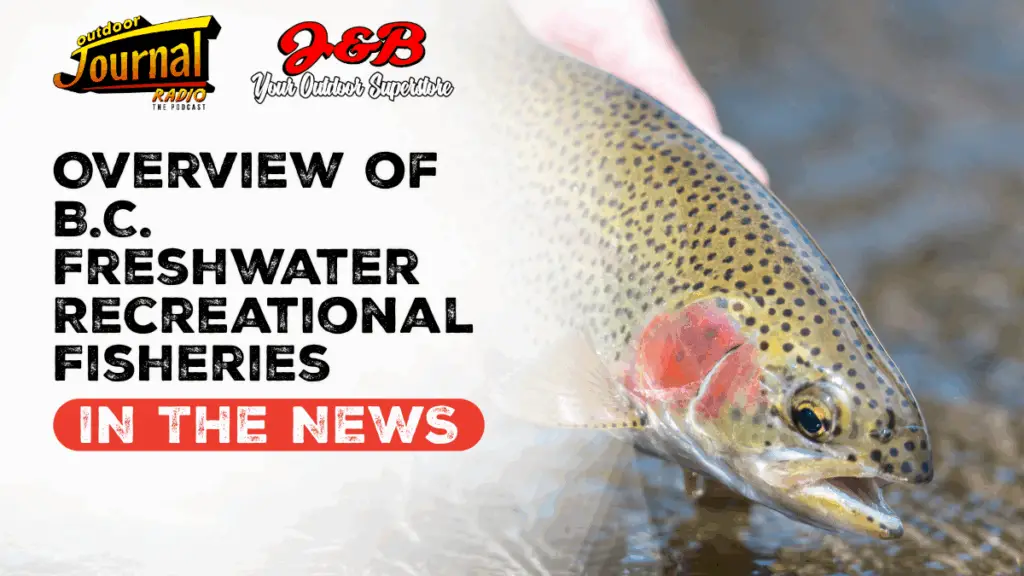
The 2023 Freshwater Recreational Fishing Survey from Fisheries and Oceans Canada confirms that freshwater fishing continues to play a vital role in British Columbia’s economy and outdoor culture, even as participation and spending dip from recent highs.

Between 2000 and 2023, freshwater angling generated on average $659 million in annual expenditures, supported more than 3,700 jobs, and contributed $365 million to GDP. In 2023 alone, about 279,000 active fishers logged 3.2 million fishing days, underscoring the sector’s resilience despite a slight decline from the previous year.
Who’s Fishing in BC?
The activity is still dominated by British Columbia residents:
- 80% of fishers were BC residents
- 90% of fishing days came from locals
- 77% of spending originated within the province
Other Canadians made up 13 percent of participants, while international visitors accounted for just 7 percent. On average, residents fished 14 days per year, compared with 7 for other Canadians and 5 for international visitors.
Seasonal and Regional Trends

Fishing remains highly seasonal, peaking in the summer months. August alone generated 533,000 fishing days and nearly $100 million in spending, highlighting its importance to both recreation and tourism.
Certain regions emerged as economic hotspots:
- Thompson-Nicola: 610,000 fishing days; $106 million in spending, with rainbow trout making up 72 percent of catches.
- Kootenay: 469,000 days; $70 million in spending, focused on trout and Dolly Varden.
- Lower Mainland: 470,000 days; $80 million in spending, driven by white sturgeon and trout.
- Skeena Region: 257,000 days; $75 million in spending, with steelhead and salmon leading the way.

Species Highlights

- Trout dominate: 2.6 million fishing days and $444 million in expenditures, with rainbow trout alone worth $240 million.
- Pacific salmon: 357,000 fishing days and $65 million in spending, led by Coho and Chinook.
- White sturgeon: Just 1 percent of total fishing days but $20 million in spending, reflecting its status as a high-value guided experience.
Guided Trips and Tourism Packages

Fishing tourism continues to boost local economies. Guided trips and lodge packages command premium prices:
- Charter boats average $1,250 per package
- Lodge and resort packages average $2,900
- Fly-in experiences are the most expensive, averaging $8,800
The Skeena and Lower Mainland regions lead in package spending, with guided sturgeon and salmon trips drawing both domestic and international tourists.
A Declining but Resilient Industry
Despite its strong impact, the survey notes a decline from 2022 to 2023:
- Total expenditures fell from $636 million to $551 million
- Fishing days dropped from 3.4 million to 3.2 million
- Participation dipped slightly, from 259,000 anglers to 253,000
The steepest declines came from out-of-province and international visitors, though BC residents also fished fewer days on average.
The Big Picture
Even with these declines, freshwater fishing remains a cornerstone of BC’s outdoor economy. Trout continue to dominate local lakes and rivers, salmon runs drive regional tourism, and white sturgeon attract high-value guided trips. With careful management and sustainable practices, the sector is expected to remain a key economic and cultural force for years to come.